
나게이레, 던지듯 꽂은 꽃
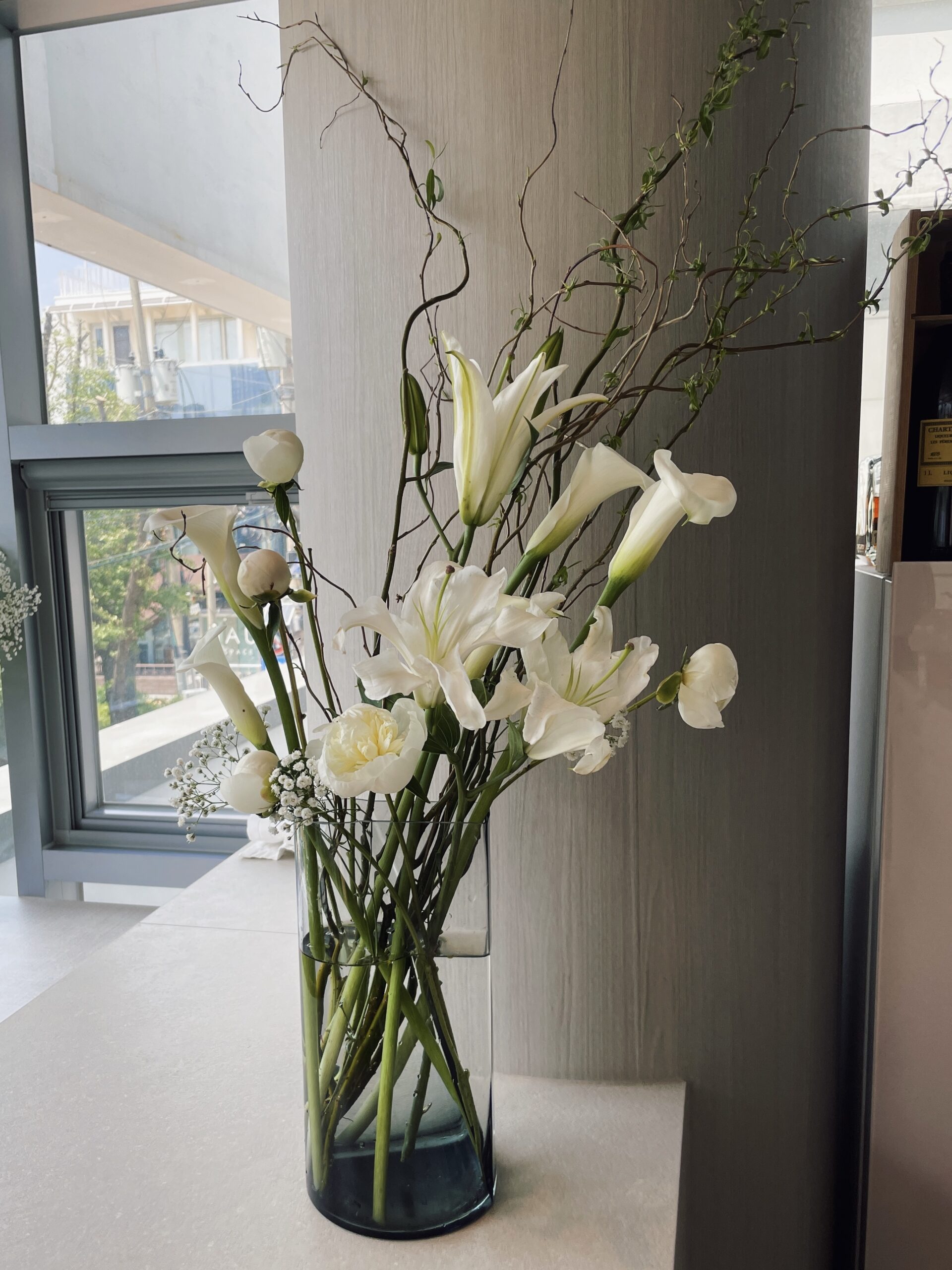
나게이레는 ‘던져 넣는다’는 뜻의 일본어입니다.
꽃을 꽂는 방식을 가리키는 말치고는, 이름부터가 격식과는 거리가 멉니다.
일본의 꽃꽂이는 오래전부터 정형화된 양식이 존재했습니다.
특히 고전적인 이케바나에서는 가지의 방향과 높낮이, 꽃과 잎의 균형을 세심하게 구성하며 하나의 형태를 완성했습니다.
나게이레는 이러한 형식적인 꽃꽂이와는 다른 방향으로 발전했습니다.
다도 문화와 가까이 맞닿으며, 꽃을 인위적으로 다듬기보다 식물이 가진 본래의 모습과 계절감을 자연스럽게 담아내는 방식으로 자리 잡았습니다.
이름처럼 정말 던져 넣듯 꽂는 것은 아닙니다.
다만 계산된 대칭이나 완벽한 균형을 좇지 않고, 꽃이 원래 가지고 있던 방향과 휘어짐을 그대로 살려서 꽂습니다.
가지가 굽어 있으면 굽은 채로, 꽃송이가 한쪽으로 치우쳐 피었으면 그 치우침 그대로 자리를 잡습니다.
사람의 의도보다 꽃이 자라 온 시간을 더 앞에 둔다는 점이 나게이레의 중요한 특징입니다.
이 방식은 손이 많이 가지 않아 보이지만, 실은 그 반대입니다.
정해진 규칙이 없기 때문에, 그 순간 가장 자연스러운 자리를 찾아내는 감각이 훨씬 더 필요합니다.
꽃을 다루는 사람은 가지를 이리저리 돌려보며, 이 꽃이 스스로 어느 방향을 향하고 싶어 하는지를 먼저 읽습니다.
식물이 가진 선과 흐름을 읽고 그 모습이 가장 자연스럽게 드러나는 자리를 찾아 화기에 놓습니다.
봉오리일 때의 단정함과 다 핀 뒤의 풍성함, 시간이 지나며 조금씩 달라지는 표정까지.
나게이레는 꽃을 가장 완벽한 순간에 붙잡아 두기보다, 식물이 지나가는 시간을 함께 바라보는 방식에 가깝습니다.
나게이레는 꽃을 다루는 기술이라기보다, 이미 있는 것을 있는 그대로 받아들이는 태도에 가깝습니다.
던져 넣듯 자연스럽게, 그러나 그 안에는 매 순간을 놓치지 않는 세심함이 담겨 있습니다.
하쿠시의 화병에 꽂힌 꽃들 역시, 나게이레의 방식으로 식물이 가진 본래의 모습을 담아냅니다.
Nageire (投げ入れ): Flowers Placed as if Thrown
Nageire literally means “to throw in.”
For a method of flower arrangement, the name itself feels surprisingly informal.
For centuries, Japanese flower arrangement has included highly structured styles. In classical ikebana, every branch, flower, and leaf is carefully positioned, with attention paid to height, direction, and balance to create a composed form.
Nageire developed in a different direction.
Closely associated with the culture of the tea ceremony, it favors the natural character of each plant over carefully constructed form. Rather than reshaping nature, it seeks to reveal the beauty already present in the flowers and the season.
Despite its name, flowers are not simply “thrown” into a vase.
Instead of pursuing perfect symmetry or calculated balance, nageire follows the natural direction and movement of each stem. A curved branch remains curved. A flower that naturally leans to one side is allowed to keep its own posture. The arrangement begins not with the arranger’s intention, but with an understanding of how the plant has grown.
Although it appears effortless, nageire demands remarkable sensitivity.
Without relying on rigid forms, the arranger must discover the position where each flower feels most at ease. Every branch is turned and observed until its natural line and rhythm reveal themselves, and only then is it placed into the vessel.
From the quiet restraint of a bud to the fullness of a flower in bloom, and even the subtle expressions that appear as time passes, nageire does not attempt to preserve a single perfect moment. Instead, it embraces the changing life of the flower itself.
Nageire is less a technique for arranging flowers than a way of accepting what already exists.
It may appear as effortless as if the flowers had simply been placed there, yet behind that simplicity lies careful observation and quiet restraint.
The flowers displayed in Hakusi’s vases are also arranged in the nageire style, embracing each plant’s natural form.