
하쿠시의 오감 ③후각
하쿠시에 들어서면 음식보다 먼저 하나의 향을 만나게 됩니다.
입구에서 피우는 인센스입니다.
2018년 첫 하쿠시부터 지금까지 같은 향을 사용하고 있습니다.
공간은 달라졌지만 향은 바꾸지 않았습니다.
후각은 기억과 가까운 감각입니다.
오래전 맡았던 향 하나가 당시의 장소와 장면을 순식간에 떠올리게 하듯, 향은 눈에 보이지 않지만 공간에 대한 기억을 오래 남깁니다.
입구를 지나 안으로 들어오면 또 다른 향들이 이어집니다.
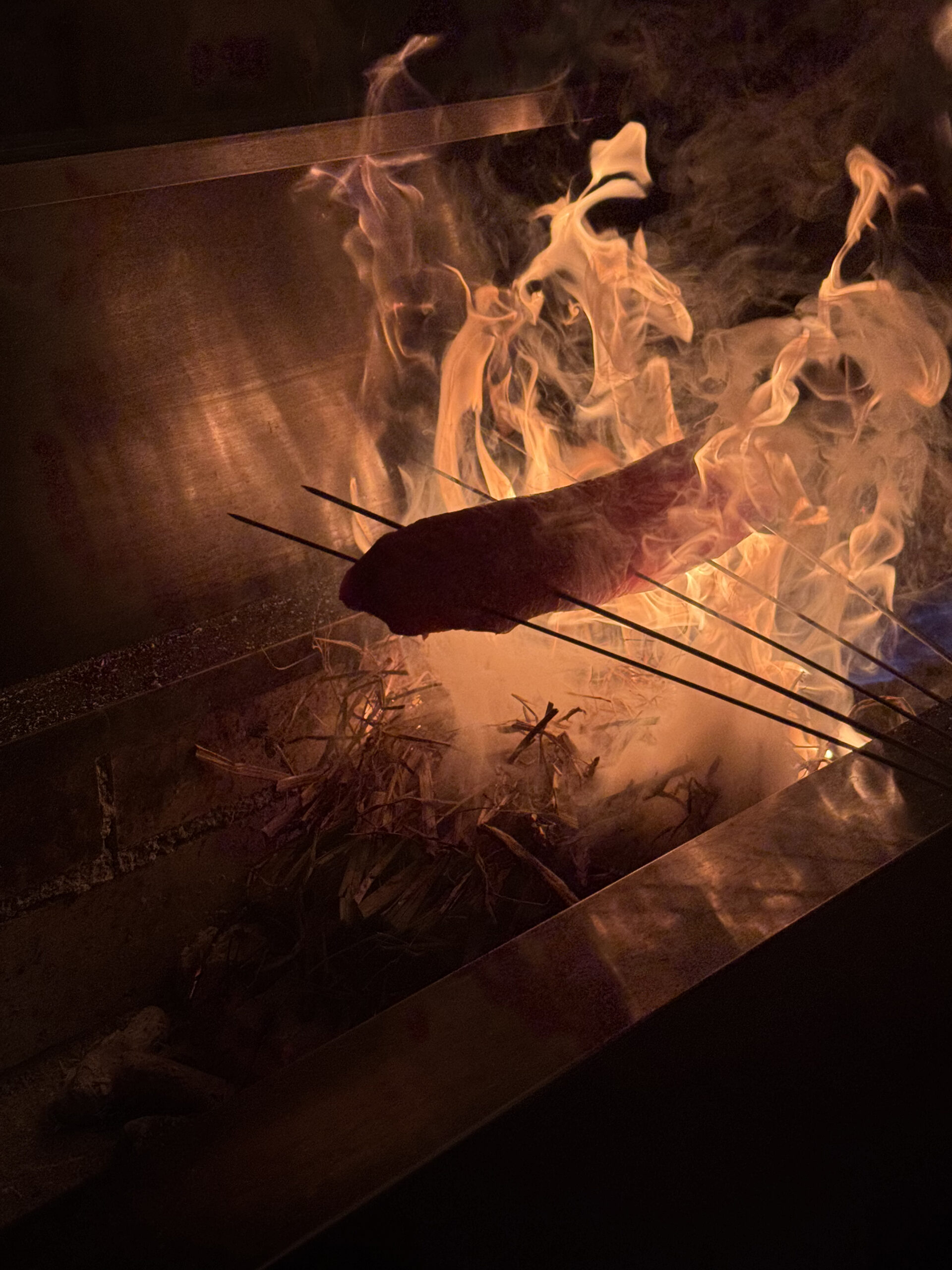
불이 붙은 숯의 마른 향,
그 위로 기름이 떨어지며 순간 짙어지는 연기.
팬 위에서 재료가 익어가는 냄새와
갓 지은 밥에서 올라오는 향.
오픈 키친에서 만들어지는 향은 주방 안에만 머물지 않습니다.
때로는 다음 접시가 나오기 전, 향이 먼저 테이블에 도착합니다.
숯의 냄새가 나면 아직 보이지 않는 요리를 상상하고,
따뜻한 밥의 향이 가까워지면 자연스럽게 그다음을 기다리게 됩니다.
그리고 접시가 놓이는 순간,
코로 먼저 느낀 향과 입안의 맛이 하나로 이어집니다.
하쿠시에서 후각은
완성된 요리의 향만을 맡는 감각이 아닙니다.
요리가 만들어지고, 다가오고, 마침내 맛이 되기까지.
그 사이의 시간을 가장 먼저 알아차리는 감각입니다.
𝗛𝗔𝗞𝗨𝗦𝗜 Through the Five Senses ③ Scent
Before encountering the food, there is a scent that greets you at 𝗛𝗔𝗞𝗨𝗦𝗜.
It comes from the incense burning at the entrance.
We have used the same scent since the very first 𝗛𝗔𝗞𝗨𝗦𝗜 in 2018.
The spaces have changed, but the scent has remained.
Our sense of smell is closely tied to memory.
Just as a familiar scent can instantly bring back a place or moment from long ago, scent is invisible yet has a way of leaving a lasting memory of a space.
As you move past the entrance, other aromas begin to emerge.
The dry, smoky scent of burning charcoal.
The sudden richness of smoke as fat falls onto the coals.
The aroma of ingredients cooking in a hot pan.
The warmth of freshly cooked rice.
In an open kitchen, these aromas do not stay within the kitchen.
Sometimes, they reach the table before the next dish does.
The scent of charcoal invites you to imagine a dish you have yet to see.
As the aroma of warm rice draws closer, you naturally begin to anticipate what comes next.
And when the dish finally arrives,
what you first sensed through your nose meets the flavor on your palate.
At 𝗛𝗔𝗞𝗨𝗦𝗜, scent is not simply about the aroma of a finished dish.
From the moment a dish is being prepared, to the moment it approaches, and finally becomes taste,
scent is the first sense to notice the time in between.