
하쿠시의 오감 ④ 시각
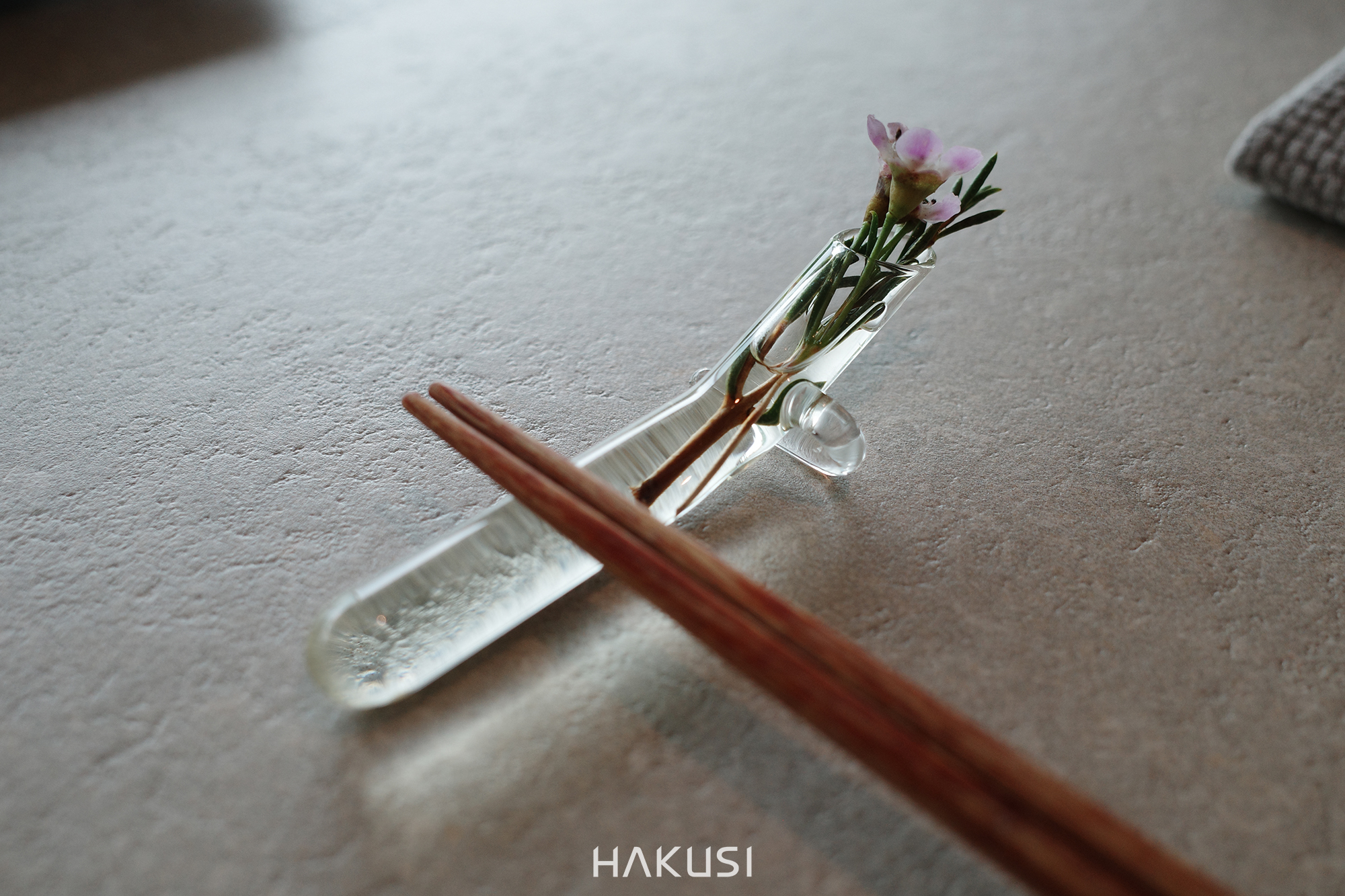
하쿠시에 앉아 있으면 시선은 한곳에 오래 머물지 않습니다.
벽을 크게 채운 강렬한 그림에서
테이블 위의 작은 생화 하시오키(젓가락 받침)로,
키친 화병에 꽂힌 몇 줄기의 식물에서
창밖으로 펼쳐진 녹색으로 시선이 움직입니다.
조금 전까지 멀리 있던 시선은
오픈 키친을 향하며 다시 가까워집니다.
접시를 하나씩 세팅하는 손,
다음 요리를 위해 가니쉬를 준비하는 움직임,
완성된 접시가 손님 앞에 놓이기까지의 과정까지.
그리고 요리가 놓이면
시선의 범위는 다시 하나의 접시만큼 작아집니다.
접시의 형태와 여백,
재료가 가진 색과 표면,
소스가 놓인 작은 위치까지
디쉬가 놓이는 순간, 그 안의 작은 요소들이 하나씩 시선을 끌어당깁니다.
하쿠시에서 보이는 것들은 크기도, 거리도, 성격도 서로 다릅니다.
공간 전체를 한눈에 바라보다가
어느 순간 아주 작은 것 하나를 들여다보고,
다시 고개를 들어 멀리 있는 풍경을 바라봅니다.
시선이 움직일 때마다
같은 공간에서도 다른 장면이 나타납니다.
하나의 식사가 이어지는 동안,
시선은 공간과 테이블 사이를 오갑니다.
그 시선의 움직임까지 하쿠시에서의 경험이 됩니다.
𝗛𝗔𝗞𝗨𝗦𝗜 Through the Five Senses ④ Sight
When seated at 𝗛𝗔𝗞𝗨𝗦𝗜, the eye rarely stays in one place for long.
From the bold artwork filling the wall
to a small fresh-flower hashioki on the table,
from a few stems arranged in a vase by the kitchen
to the greenery unfolding beyond the window,
the gaze continues to move.
A moment ago, it was looking into the distance.
Now, it draws closer toward the open kitchen.
Hands setting each plate in place,
the movements of preparing garnishes for the next dish,
the process unfolding until a finished plate arrives before the guest.
And once the dish is placed on the table,
the field of vision narrows again to the size of a single plate.
The shape of the plate and its negative space,
the colors and surfaces of the ingredients,
the precise placement of a sauce—
the moment the dish arrives, these small details begin to draw the eye one by one.
What we see at 𝗛𝗔𝗞𝗨𝗦𝗜 varies in scale, distance, and character.
The eye takes in the entire space,
then finds itself drawn to something very small,
before looking up again toward a distant view.
Each time the gaze shifts,
the same space reveals a different scene.
Throughout the course of a meal,
the gaze moves back and forth between the space and the table.
That movement of the eye is part of the experience at 𝗛𝗔𝗞𝗨𝗦𝗜.