
슌(旬), 가장 충만한 순간
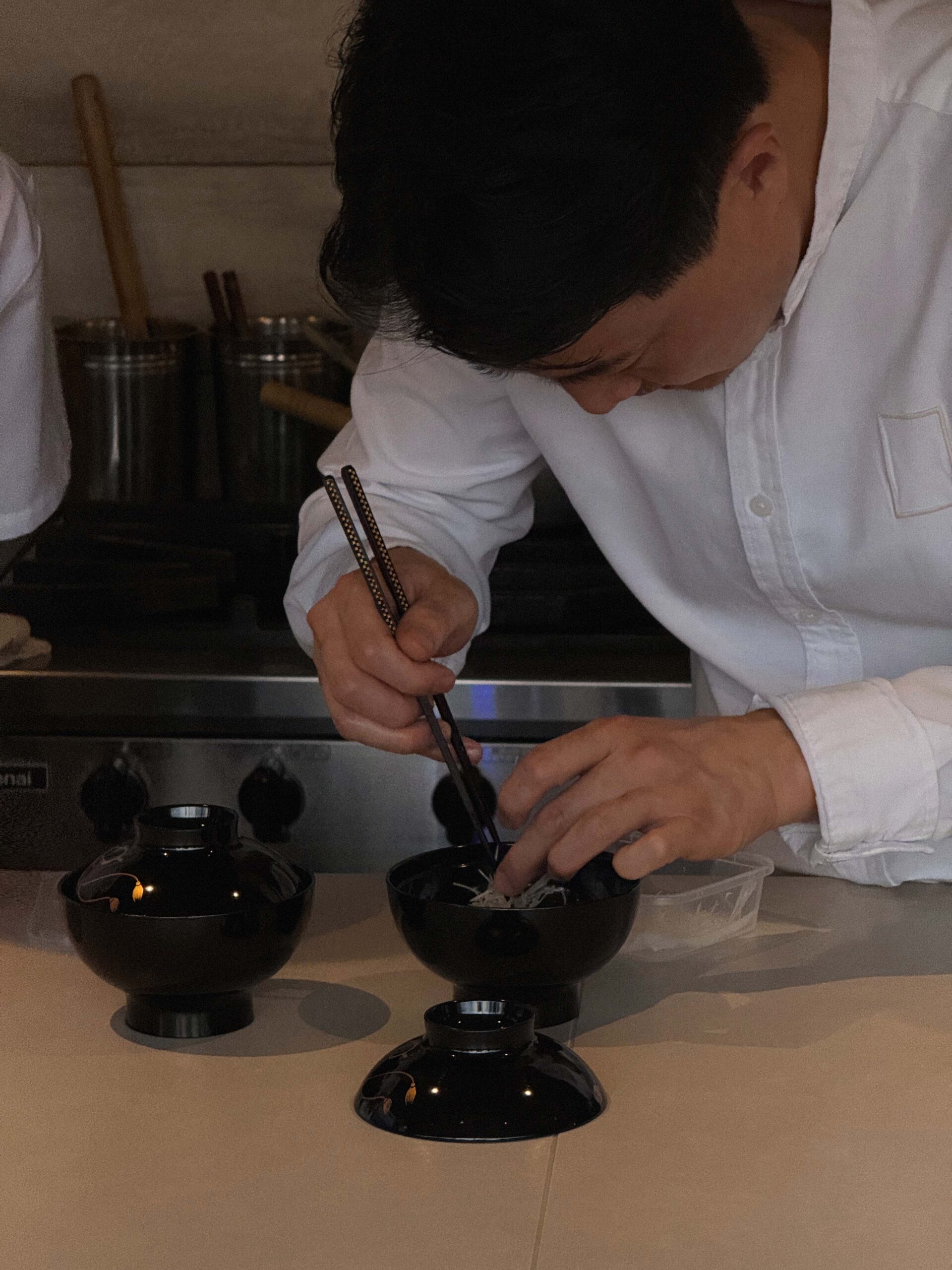
같은 재료라도 어느 날의 맛은 유독 다르게 느껴집니다.
일본 요리에서는 이 순간을 슌(旬)이라 부릅니다. 한 재료가 일 년 중 가장 맛있는 상태에 도달한 시기를 가리키는 말입니다. 단순히 ‘제철’이라고 옮기기엔 아쉬운 구석이 있습니다. 슌에는 시기를 넘어 정점이라는 의미가 함께 담겨 있기 때문입니다.
하시리가 계절보다 한발 먼저 도착한 기대라면, 슌은 그 기대가 완전히 무르익은 상태입니다. 재료 안에 있는 단맛과 감칠맛, 지방과 수분이 가장 이상적인 균형을 이루는 짧은 구간입니다. 이르지도 늦지도 않은, 정확히 그 지점입니다.
문제는 이 지점이 고정돼 있지 않다는 것입니다. 같은 어종이라도 잡히는 바다와 그해 수온에 따라 슌의 시기가 조금씩 움직입니다. 달력을 보고 판단할 수 있는 일이 아닙니다. 매일 들어오는 재료를 직접 살피고 손끝으로 확인하는 수밖에 없습니다.
그래서 슌을 다루는 사람에게는 관찰이 일입니다. 살의 탄력, 기름의 선명함, 껍질의 광택. 눈으로 보고 손으로 짚어가며, 지금이 정말 그 순간인지를 매번 다시 판단합니다. 어제 최상급이었던 재료가 오늘은 아닐 수도 있습니다. 그 미세한 차이를 놓치지 않는 것이 기본기입니다.
슌의 재료를 손에 쥐었을 때 조리는 오히려 단순해집니다. 이미 재료 안에 모든 것이 갖춰져 있기 때문입니다. 복잡한 양념이나 과한 손질은 필요하지 않습니다. 재료가 스스로 낼 수 있는 맛을 가리지 않는 것, 그것이 슌을 대하는 태도에 가깝습니다.
한 접시 위에 슌의 재료가 놓일 때, 그 뒤에는 보이지 않는 시간이 있습니다. 이 재료가 정점에 이르기까지 기다린 계절과, 그 정점을 알아본 눈, 그리고 그 상태를 해치지 않고 그대로 옮겨낸 손이 함께 있습니다.
슌은 오래 머물지 않습니다. 정점을 지나면 재료는 다시 다음 단계로 넘어갑니다. 그래서 슌의 순간은 매번 다시 찾아야 하는 것이지, 한번 알았다고 계속 붙잡아둘 수 있는 것이 아닙니다.
지금 이 접시가 슌이라는 것은, 오늘 이 순간이 아니면 다시 만나기 어렵다는 뜻이기도 합니다.
그 짧음을 알기에, 한 입이 더 선명하게 남습니다.
하쿠시의 메뉴가 계절에 따라 달라지는 이유도 여기에 있습니다.
정해진 재료를 계절에 맞추는 것이 아니라, 지금 가장 좋은 순간에 도달한 재료를 찾아 그날의 요리를 만듭니다.
계절을 요리에 담는다는 것은 봄에는 봄 재료를, 가을에는 가을 재료를 사용하는 것만을 의미하지 않습니다.
그 계절 안에서도 가장 충만한 순간을 알아보고, 그 맛을 해치지 않는 방식으로 한 접시에 옮기는 것.
그 계절 안에서도 가장 충만한 순간을 알아보고, 그 맛을 해치지 않는 방식으로 한 접시에 옮기는 것.
하쿠시의 계절은 그렇게 접시 위에 머뭅니다.
Shun (旬), At Its Peak
Even the same ingredient can taste remarkably different from one day to the next.
In Japanese cuisine, this moment is called shun (旬)—the brief period when an ingredient reaches its finest state of the year. Translating it simply as “in season” does not quite capture its meaning. Shun is not only about seasonality, but about reaching a peak.
If hashiri is the anticipation of a season arriving just ahead of its time, shun is the moment when that promise has fully ripened. Sweetness and umami, fat and moisture come into their most harmonious balance. Neither too early nor too late, but precisely at that point.
The difficulty is that this point never stays fixed. Even within the same species of fish, the timing of shun shifts depending on the waters it comes from and the temperature of the sea that year. It cannot be determined by looking at a calendar. The ingredients arriving each day must be examined and felt by hand.
For a chef working with shun, observation is part of the craft. The firmness of the flesh, the clarity of the fat, the sheen of the skin—each is examined to determine whether the ingredient has truly reached that moment. What was exceptional yesterday may not be so today. Recognizing these subtle differences is part of the foundation of the work.
When an ingredient reaches shun, cooking often becomes simpler. Everything it needs is already there. Elaborate seasoning and excessive preparation become unnecessary. The task is not to obscure the flavor the ingredient can express on its own. This is perhaps the closest way to describe the attitude toward shun.
When an ingredient at its peak arrives on the plate, there is an unseen passage of time behind it: the season that brought it to this point, the eye that recognized its peak, and the hand that carried it to the plate without disturbing what made it exceptional.
Shun does not last long. Once the peak has passed, the ingredient begins to move into its next stage. It is a moment that must be found again and again, never something that can be learned once and held onto.
For a dish to be shun today also means that the same moment may be difficult to encounter again.
Perhaps it is this brevity that makes a single bite remain so vivid.
This is also why 𝗛𝗔𝗞𝗨𝗦𝗜’s menu changes with the seasons. Rather than fitting predetermined ingredients into a season, we look for ingredients that have reached their finest moment and allow the dish to begin there.
To express a season through food is not simply to use spring ingredients in spring or autumn ingredients in autumn. It is to recognize the most abundant moment within that season, and carry its flavor onto the plate without diminishing it.
This is how the seasons come to rest on the plate at 𝗛𝗔𝗞𝗨𝗦𝗜.