
한 접시 위에 펼쳐진 계절
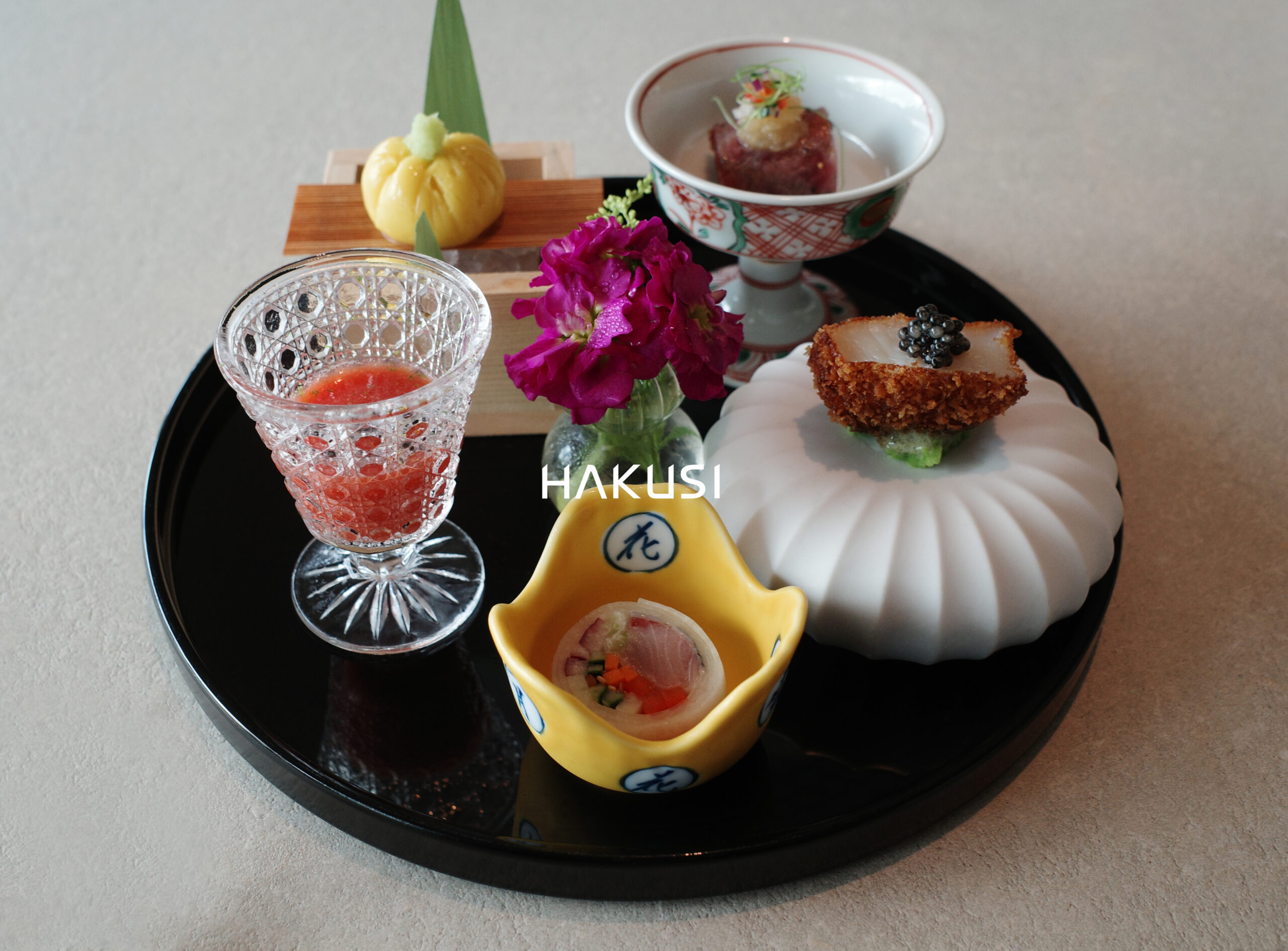
구미자카나는 여러 가지 작은 요리를 한데 구성해 내는 일본요리의 한 방식입니다.
하나의 주재료와 하나의 조리법에 집중하는 접시와 달리, 구미자카나에는 서로 다른 맛과 온도, 질감이 한 번에 놓입니다.
생으로 다룬 것과 익힌 것,
차갑게 준비한 것과 따뜻하게 완성한 것,
부드러운 것과 바삭한 것 등.
각각은 작은 한 입이지만 서로 다른 역할을 가집니다.
어떤 재료를 함께 놓을지, 어떤 맛 다음에 무엇을 먹게 할지, 색과 높이, 기물의 크기와 위치까지 하나의 구성 안에서 생각합니다.
하쿠시에서는 구미자카나를 코스의 두 번째에 냅니다.
아직 식사가 본격적으로 깊어지기 전, 한 번에 펼쳐진 여러 개의 작은 요리를 통해 지금 하쿠시가 바라보고 있는 계절을 먼저 보여줍니다.
서로 다른 작은 요리들이 한데 놓였을 때,
하나의 계절은 여러 가지 맛과 모습으로 펼쳐집니다.
그렇게 하나의 계절이 하쿠시의 구미자카나에서 여러 개의 작은 장면으로 담겨집니다.
Kumizakana is a style of Japanese cuisine in which several small dishes are composed and presented together.
Unlike a dish that focuses on a single ingredient or cooking technique, kumizakana brings together different flavors, temperatures, and textures all at once.
Raw and cooked,
chilled and warm,
soft and crisp.
Each may be only a small bite, but each plays a different role. What ingredients are placed together, what follows each flavor, and even the colors, heights, sizes, and positions of the vessels are all considered as part of a single composition.
At 𝗛𝗔𝗞𝗨𝗦𝗜, kumizakana is served as the second course.
Before the meal begins to deepen, an assortment of small dishes offers an early glimpse of the season as 𝗛𝗔𝗞𝗨𝗦𝗜 sees it.
When these different dishes come together,
a single season unfolds through many flavors and forms.
At 𝗛𝗔𝗞𝗨𝗦𝗜, kumizakana captures one season in a series of small scenes.