
흐름의 시작, 오시보리
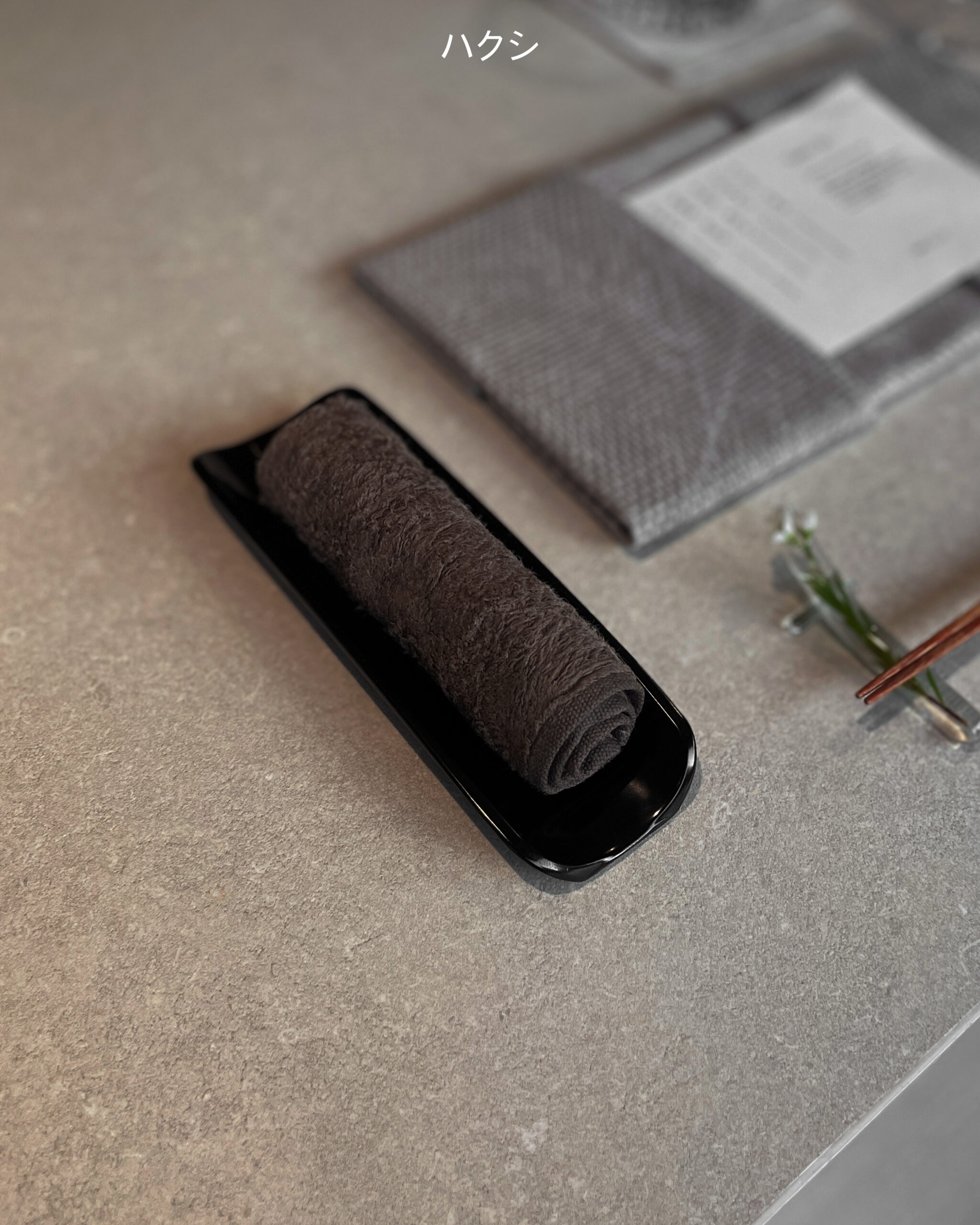
하쿠시에서는 가장 먼저 한 장의 따듯한 오시보리를 건넵니다.
오시보리(おしぼり)는 일본에서
손님을 맞이할 때 가장 먼저 내는 물수건입니다.
손을 정돈하는 작은 의식이자,
“이제 편히 머무르셔도 좋습니다”라는
환대의 마음이 담겨 있습니다.
그 시작은 에도 시대의 여관에서 비롯되었습니다.
먼 길을 걸어온 이들에게 젖은 수건을 내어
손의 먼지를 닦게 하던 배려가
오늘날 식탁 위까지 이어졌습니다.
하쿠시의 오시보리는
‘이마바리 타올(今治タオル)’로 준비됩니다.
일본 에히메현의 작은 항구도시 ‘이마바리’는
100년 넘게 타올만을 직조해온 곳입니다.
그곳의 물은 유난히 부드럽고,
면사에 남는 불순물이 적어
손끝에 닿는 감촉이 맑고 깨끗합니다.
그 섬세한 물로 짜여진 천이 이마바리 타올 특유의
부드러움과 흡수력을 만들어냅니다.
하쿠시에서는 손님이 머무는
모든 순간의 흐름을 세심히 다룹니다.
테이블 위에서는,
오시보리가 그 흐름의 시작이 됩니다.
At 𝗛𝗔𝗞𝗨𝗦𝗜, the first gesture is a single,
gently offered oshibori.
In Japan, an oshibori—a warm, moistened hand towel— is traditionally presented to guests as the very first welcome.
It’s a quiet ritual of preparation, a way of saying,
“You may now rest, and be at ease.”
The custom traces back to the Edo period,
when travelers arriving at inns were offered damp towels to wipe away the dust from their hands—
a simple act of care that continues today,
at the dining table.
At 𝗛𝗔𝗞𝗨𝗦𝗜, each oshibori is prepared with
Imabari Towel, woven in the seaside town of
Imabari, Ehime.
For over a century, the region has been devoted
solely to towel making.
Its soft, mineral-balanced water leaves almost no impurities on the cotton,
creating a fabric that feels remarkably clean and delicate to the touch.
That purity gives Imabari towels their distinctive softness and absorbency.
At 𝗛𝗔𝗞𝗨𝗦𝗜, every moment of a guest’s stay is
shaped with quiet precision.
At the table,
the oshibori marks the beginning of that flow.