
우마미의 제 역할
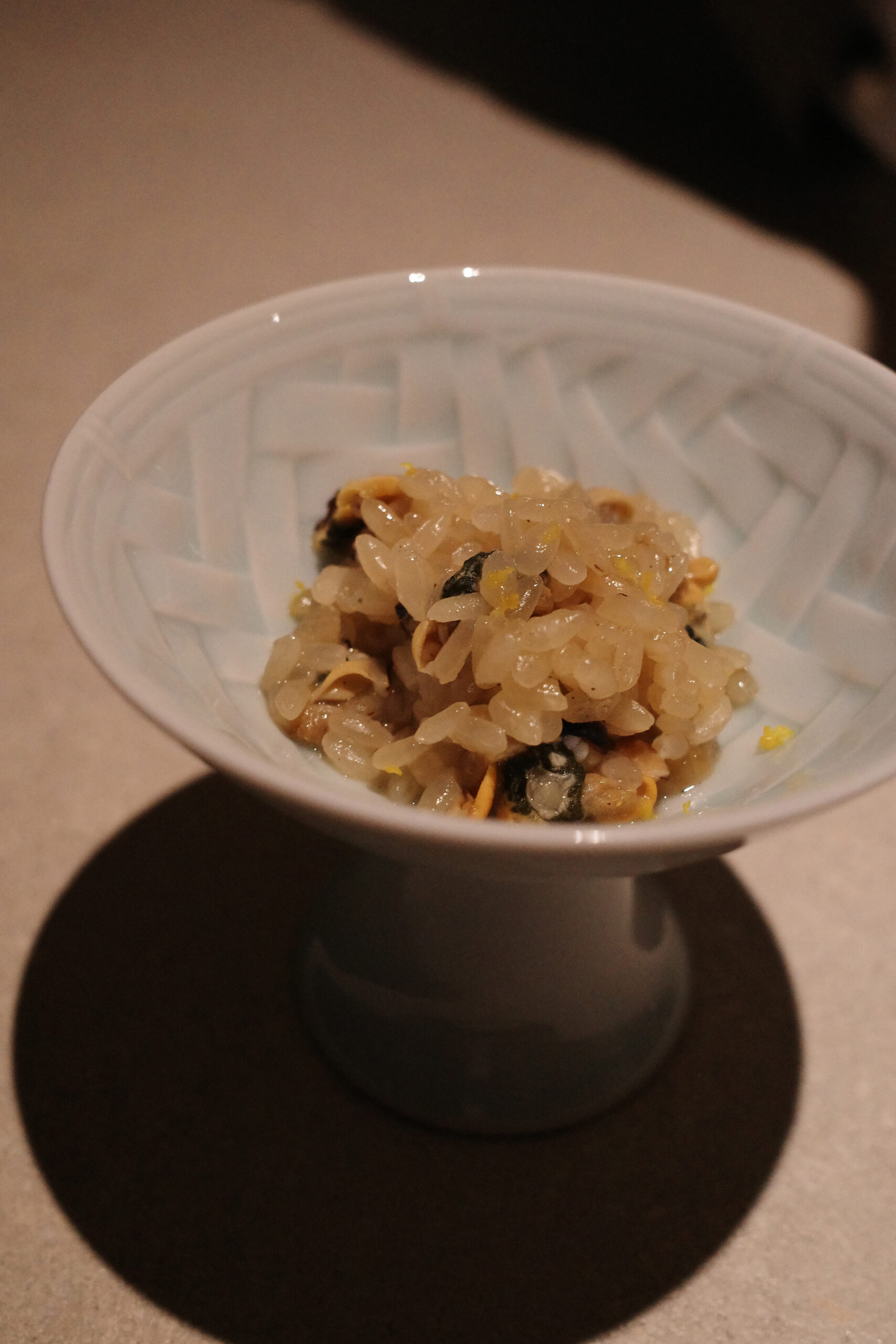
혀가 느끼는 맛은 오랫동안 네 가지로 여겨졌습니다.
단맛, 짠맛, 신맛, 쓴맛.
우마미는 1908년, 일본 화학자 이케다 기쿠나에가 다시마 육수를 연구하던 중 글루탐산을 분리해 독립된 미각으로 규명하고 이름 붙인 다섯 번째 맛입니다. 글루탐산이 혀의 미각 수용체를 자극할 때 느껴지는 것으로, 달거나 짜기보다 깊고 오래 이어지는 감칠맛이 특징입니다.
우마미는 하나의 재료 안에서도 존재하지만, 서로 만날 때 더욱 깊어집니다.
다시마와 가쓰오부시가 만날 때, 된장이 오래 발효될 때, 토마토가 볕에 익어갈 때- 재료 안에 조용히 쌓인 감칠맛이 한층 선명하게 드러납니다.
그래서 우마미는 강하게 주장하는 맛이 아닙니다.
다른 맛들 사이에 스며들어, 요리 전체를 은은하게 받쳐주는 방식으로 존재합니다.
일본 요리에서 다시(出汁)를 다루는 일은 우마미를 얼마나 끌어내느냐의 문제입니다.
다시마를 우리는 물의 온도, 가쓰오부시를 넣고 빼는 타이밍 하나만으로도 같은 재료에서 전혀 다른 깊이의 국물이 만들어집니다.
하쿠시의 육수도 다시(出汁)에서 출발합니다.
강한 양념으로 맛을 밀어붙이기보다, 재료가 이미 품고 있는 감칠맛을 온전히 끌어내는 쪽을 택합니다.
다시마는 물에 담긴 채 오랜 시간 천천히 우러나야 합니다.
너무 오래 끓이면 쓴맛이 올라오고, 너무 짧으면 우마미가 충분히 우러나지 않습니다.
이 경계를 아는 것이 다시를 다루는 사람의 몫입니다.
눈으로 색을 보고, 향으로 정도를 가늠한 뒤, 마지막에는 혀로 확인합니다.
같은 다시마와 가쓰오부시를 쓰더라도, 그날의 재료 상태에 따라 우려내는 시간은 조금씩 달라집니다.
정해진 레시피보다, 그날의 맛이 가장 좋은 순간을 기준으로 합니다.
우마미가 잘 끌어내진 국물은 첫맛보다 뒷맛에서 존재를 드러냅니다.
삼킨 뒤에도 입안에 은은하게 남아, 다음 한 입을 자연스럽게 부르는 여운을 만듭니다.
그래서 우마미는 화려한 맛이 아니라, 계속 먹고 싶어지는 맛에 가깝습니다.
자극적인 맛은 금방 물리지만, 우마미가 중심을 잡은 요리는 코스의 마지막까지도 편안하게 이어집니다.
혀에 남는 마지막 인상이 자극이 아니라 여운일 때, 우마미는 제 역할을 다한 것입니다.
그리고 그 여운이, 하쿠시가 만들어가는 맛입니다.
Umami (旨味), The Fifth Taste
For centuries, people believed the tongue could perceive only four basic tastes: sweet, salty, sour, and bitter.
In 1908, Japanese chemist Kikunae Ikeda identified umami as a distinct taste while studying kombu dashi. By isolating glutamate, he named what we now know as the fifth taste. It is the savory sensation created when glutamate stimulates the tongue’s taste receptors—a flavor that is neither sweet nor salty, but deep, rounded, and long-lasting.
Umami exists within a single ingredient, but it becomes richer when ingredients come together. When kombu meets katsuobushi, when miso slowly ferments, or when tomatoes ripen under the sun, the savory compounds already present become more vivid and expressive.
That is why umami is never a flavor that demands attention. Instead, it quietly supports every other taste, giving a dish depth without overpowering it.
In Japanese cuisine, making dashi is ultimately about how well umami can be drawn out. The temperature of the water, or the precise moment the katsuobushi is added and removed, can produce remarkably different depths of flavor from exactly the same ingredients.
At 𝗛𝗔𝗞𝗨𝗦𝗜, everything begins with dashi.
Rather than relying on bold seasoning, we choose to reveal the umami that the ingredients already possess.
Kombu must steep slowly in water over time. Leave it too long and bitterness emerges; remove it too soon and the umami remains locked inside.
Knowing where that balance lies is the work of the cook. We observe the color, judge the aroma, and finally trust the palate.
Even when using the same kombu and katsuobushi, the extraction time changes from day to day. Instead of following a fixed recipe, we follow the moment when the flavor reaches its fullest expression.
A well-made dashi reveals itself not in the first sip, but in the finish. It lingers gently on the palate, creating an aftertaste that naturally invites the next bite.
That is why umami is not about intensity. It is about creating a flavor you never tire of. Strong flavors quickly become overwhelming, while a dish built around umami carries you comfortably through an entire course.
When the final impression is not intensity, but lingering resonance, umami has fulfilled its role.
And that lingering resonance is the flavor 𝗛𝗔𝗞𝗨𝗦𝗜 continues to create.